

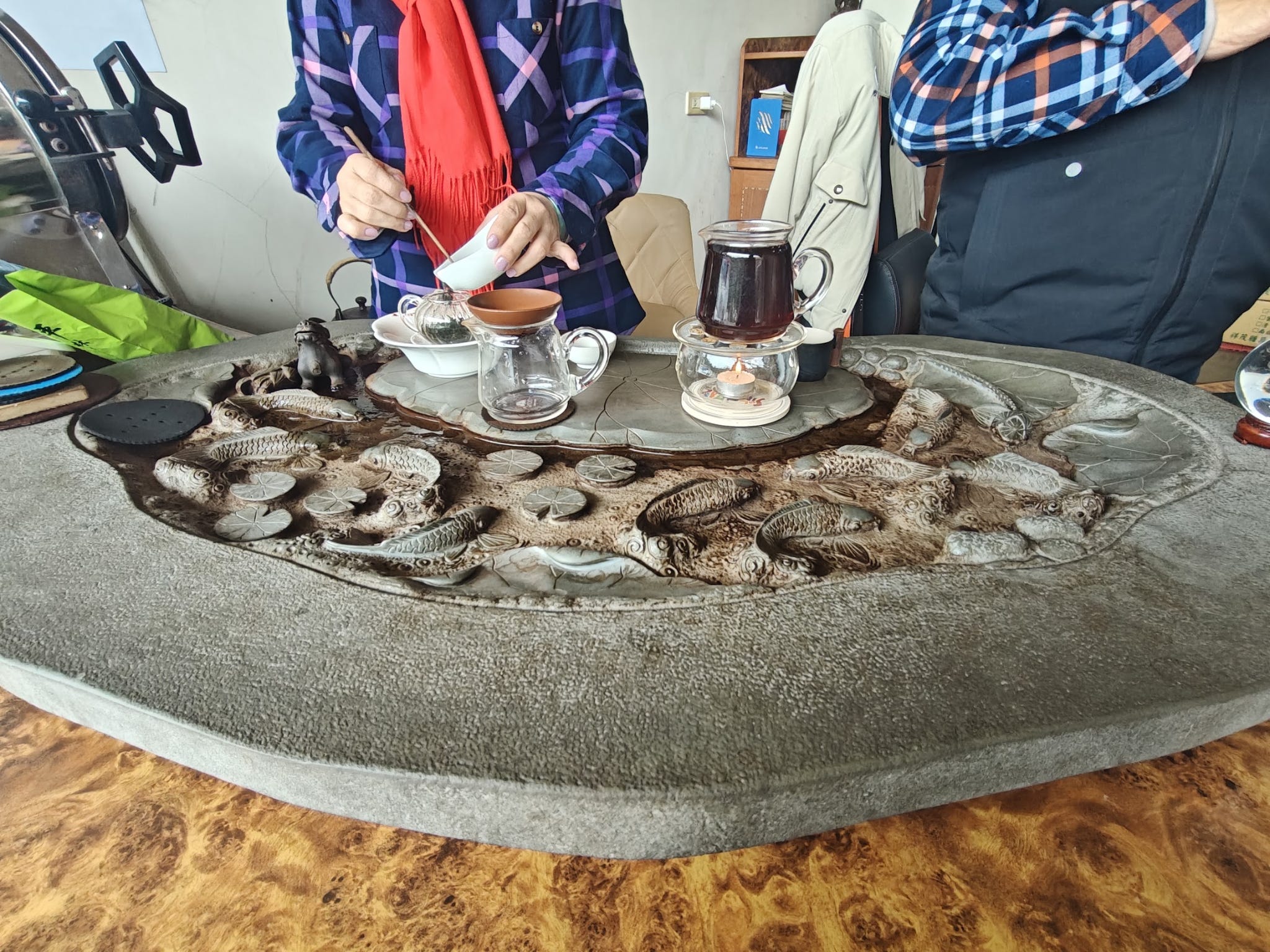
Last year, I visited Taiwan with a single purpose: to drink as much tea as possible. I visited close to a dozen tea farms, and drank some extraordinary tea. But international trade theory would say that I made a terrible mistake – that Taiwan is the worst place to find good Taiwanese tea. Why?
While I was in London, I bought a cheap tea from Yushu Tea Gallery, since their fancy tea was twice as expensive. Now that I’m back in California, I want to order more from the same shop, and shipping to the US is so expensive that the fancy tea now costs only a little more than the cheap one! So California Karthik buys the fancy tea, while London Karthik buys the cheap tea. This is the Alchian-Allen effect: the idea that producers export high-quality goods and keep low-quality goods for domestic consumption.
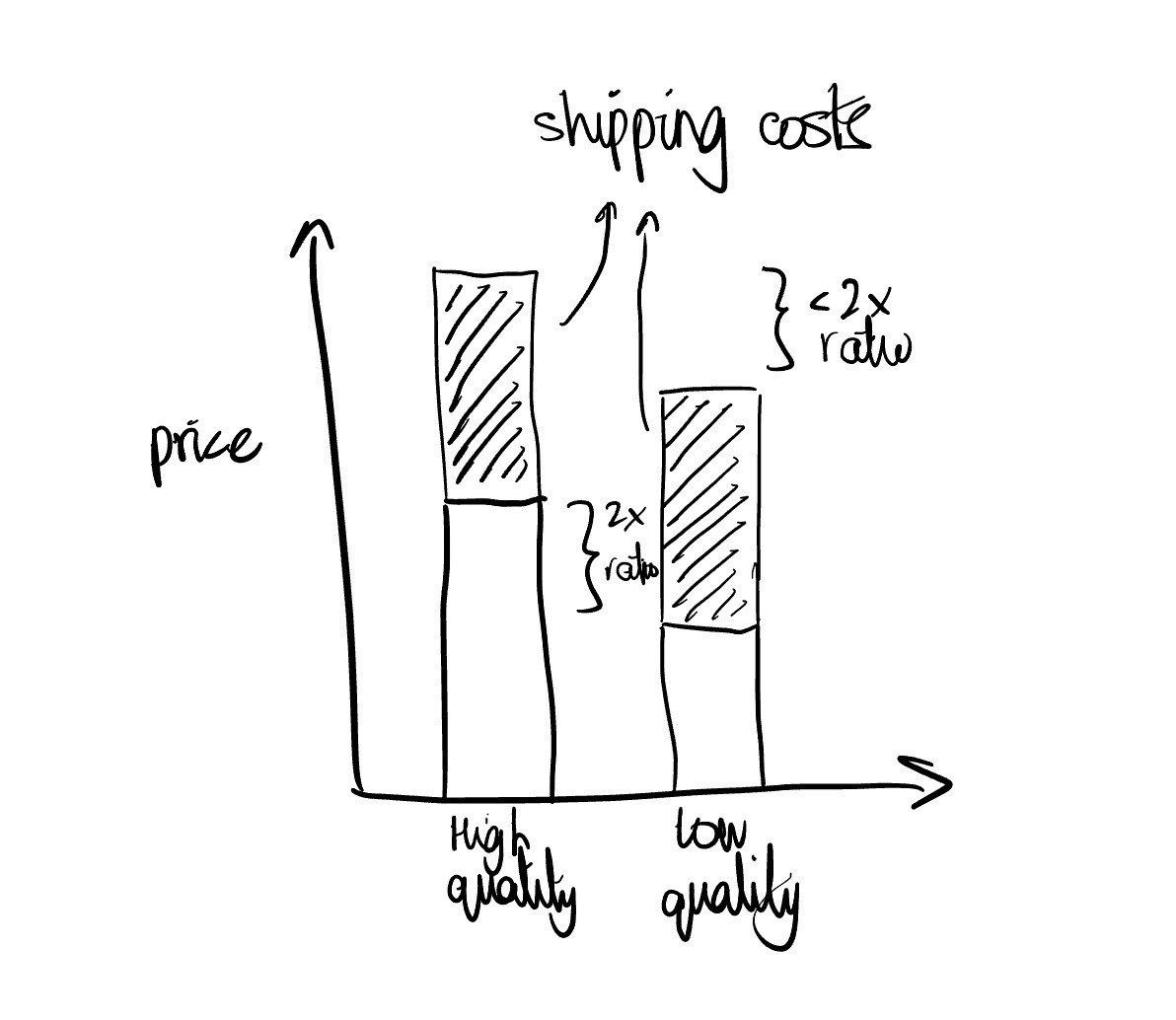
By this logic, Taiwan’s best tea should end up in places like California, and Taiwanese tea drinkers should be left with the cheap stuff. But this is definitely not true in tea. Plenty of tea freaks make the same pilgrimage I did, because everyone knows the best teas aren’t exported. And at every farm where I had excellent tea, the farmers exported little or none of it. So what’s going on?
Is it because domestic buyers value quality more? Probably not. A natural explanation is that Taiwan has a much stronger tea culture than most other countries, so Taiwanese buyers are more willing to pay for quality than foreign buyers. Maybe foreign buyers are mostly randos who want industrially-produced dust in teabags, while domestic buyers are tea connoisseurs. If this is true, it’s unsurprising that the best tea stays in Taiwan.
But even though the average Taiwanese buyer is more quality-sensitive than the average foreign buyer, there are more quality-sensitive foreign buyers in total, because the world is a big place! And the tea market is highly differentiated, so hotels stocking tasteless tea bags aren’t in the same market as connoisseurs.
Anecdotally, I drank and purchased tea at many Taipei stores; their tea was, on average, lower quality than what I can find in the US. This is not surprising – tea consumers in the US are freaks who obsess over a tea’s competition grade or its season of harvest, while tea consumers in Taipei are regular people with lives. This is why internet tea forums often advise against buying tea in Taipei. So Taiwan’s tea culture probably isn’t why its best tea stays home.
Is it because tea producers are too small to export? Probably not. Maybe tea is produced artisanally in small batches, and foreign buyers want more volume than a single farm can supply. Some of the farmers I talked to gave this reason.
But these farms are bigger than you might think. Every farm I visited had several acres of harvested land; every storefront featured tens of pounds of processed tea. This makes sense: commercial buyers in Taiwan, like Taipei tea shops and hotel chains, have minimum order sizes too. So nothing stops a farmer from selling their entire harvest to a foreign buyer who offers a better price than they can get from domestic buyers. Indeed, two of the farmers I talked to already exported, each to a single buyer in mainland China.
Is it because shipping costs are less important than tariffs? No. A key premise of the Alchian-Allen effect is that shipping costs are per-pound, so good tea and bad tea have the same shipping costs. But tariffs are proportional to prices, so they don’t distort the price ratio of good tea and bad tea. So maybe most of the cost of exporting comes from tariffs, which restore the price gap between good and bad tea?
I love this argument. It’s so cute, and it tickles my trade economist brain in the right places. But unfortunately – well, fortunately for me – tariffs on tea are low or zero in most big markets.1
Is it because small farmers can’t find international buyers? Yes. The most common reason I heard from tea farmers for not exporting was that they simply didn’t know how to find foreign buyers. This makes sense! Even if you know that exporting would be profitable, it can be daunting to find a buyer abroad when you’re a small farmer in the mountains of Taiwan.
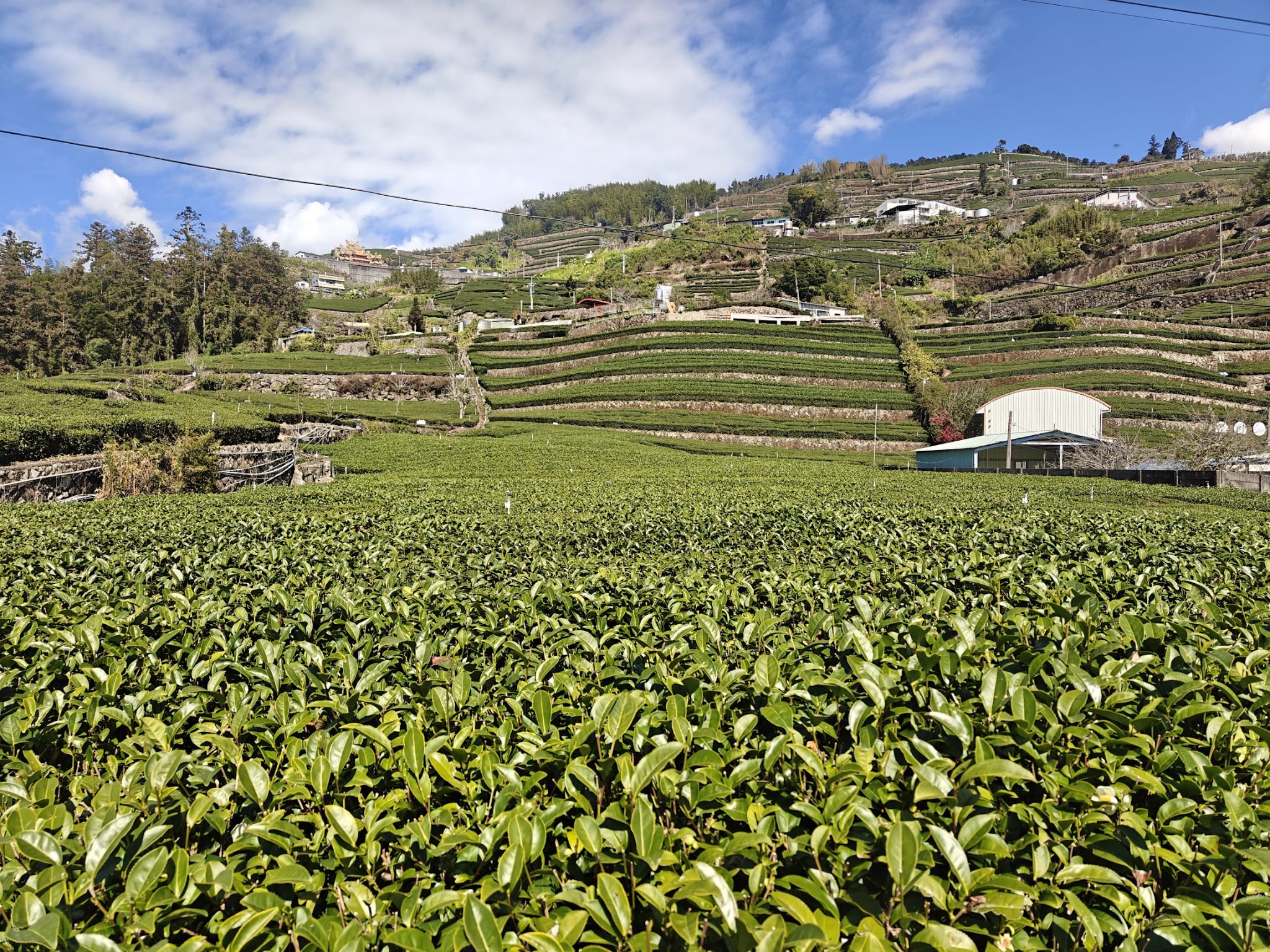
This is a big part of why Taiwan’s township farmers’ associations run tea competitions. One of my favorite teas was an oolong from Dong Ding mountain in Lugu township. The Lugu Farmers’ Association runs an annual competition for Dong Ding oolongs, which drew more than 4,000 entries in its spring 2025 round. Discerning buyers want to find the great farmers among these thousands of contenders, but they can’t possibly vet each one. So the associations grade the teas in blind tastings, certify them, and list the producers in a catalog that buyers can peruse. The underlying problem is what trade economists call a matching friction – the difficulty of buyers and sellers finding each other in a market. Quality certification is a telltale sign that a market suffers from matching frictions, and a key part of how buyers and sellers reduce them.
So tea breaks trade economics because trade economics is simple and easily broken. Here, the broken assumption is that sellers can find foreign buyers just as easily as they can find domestic buyers. That sounds crazy, but economic models have to make simplifying assumptions that are reasonable on average, even if they aren’t true everywhere (and the Alchian-Allen effect does hold on average).
But if you want great tea, ignore any trade economists you might inexplicably be friends with, and go to the source.2
The US and EU both charge zero tariffs on tea. China has tariffs on some teas, so this could be a partial explanation for Taiwanese teas not making it to China.
Or if you live in the Bay Area, go to Teance Fine Teas, the greatest tea shop in mythe world.